
Arena
Built and led the team behind the 2.0 platform
An app for quick scaling.
Arena, called LMArena until 2026 and Chatbot Arena before that, began as a UC Berkeley research project with a simple idea: ask a question, get answers from two anonymous AI models, and vote for the better one. Those votes power one of the most-watched leaderboards in AI, and the community has cast millions of them. The original site was a research prototype, and users called it laggy and bug-prone, especially on phones and at peak hours.
When Arena spun out of Berkeley as a company in April 2025, it needed a platform built to scale. We led the engineering team that rebuilt it from scratch: a full rebuild, not a fresh coat of paint. It took three months to go from zero code to a public beta, and four to carry all of Arena's production traffic.
Visit Arena →From zero code to a $600M valuation.
Arena was becoming a company, raising its first round, and replacing its research prototype at the same time. The new platform had to hold up for millions of voters and for the scrutiny that comes with one of AI's most-cited leaderboards, and it had one quarter to get there.
We led the engineering team from an empty repository to production, setting the architecture and priorities and writing code alongside the team. The core battle loop went to the community first, through an alpha in Discord and then a public beta, so real voters shaped the platform before it replaced the old site.
Head-to-head model battles.
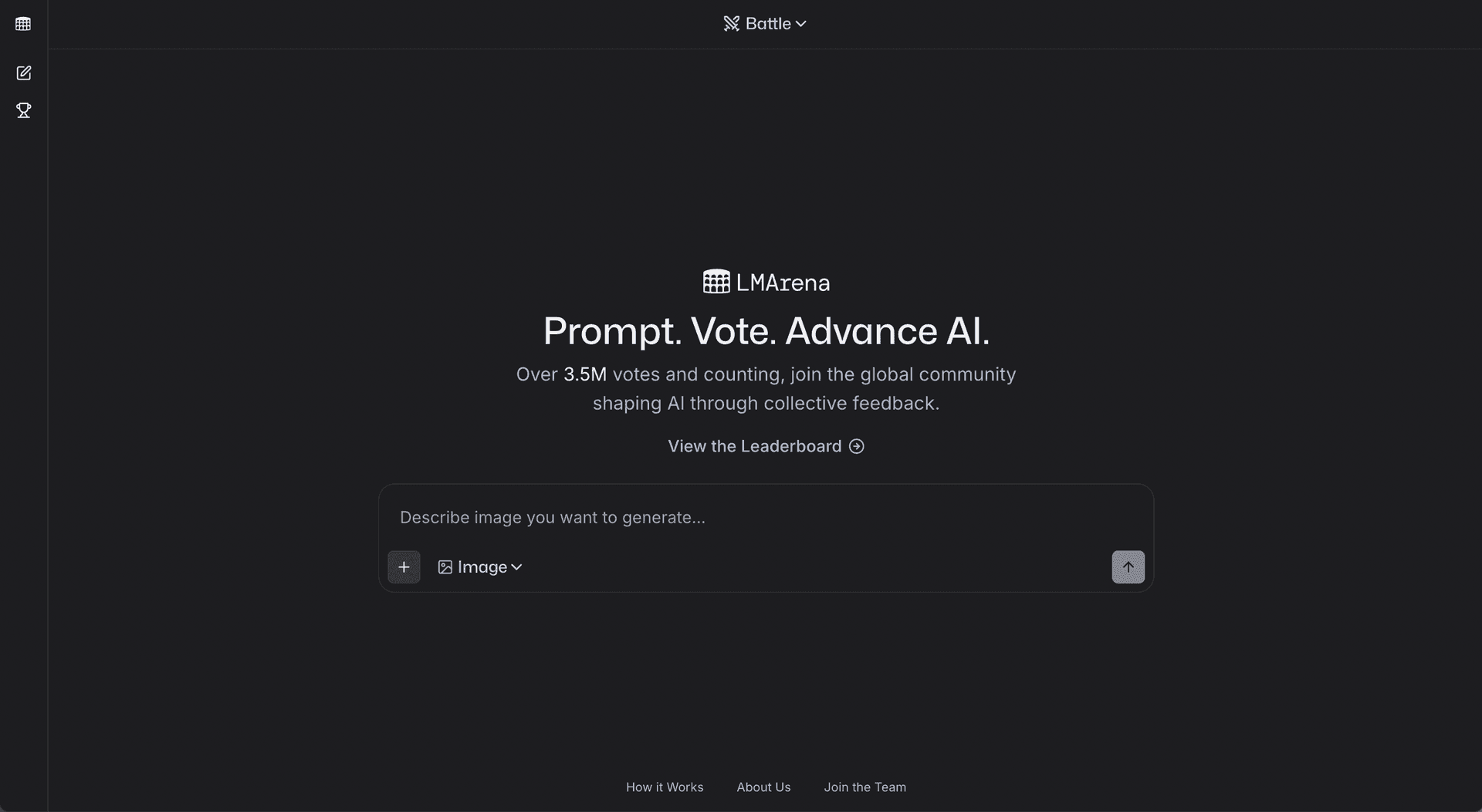
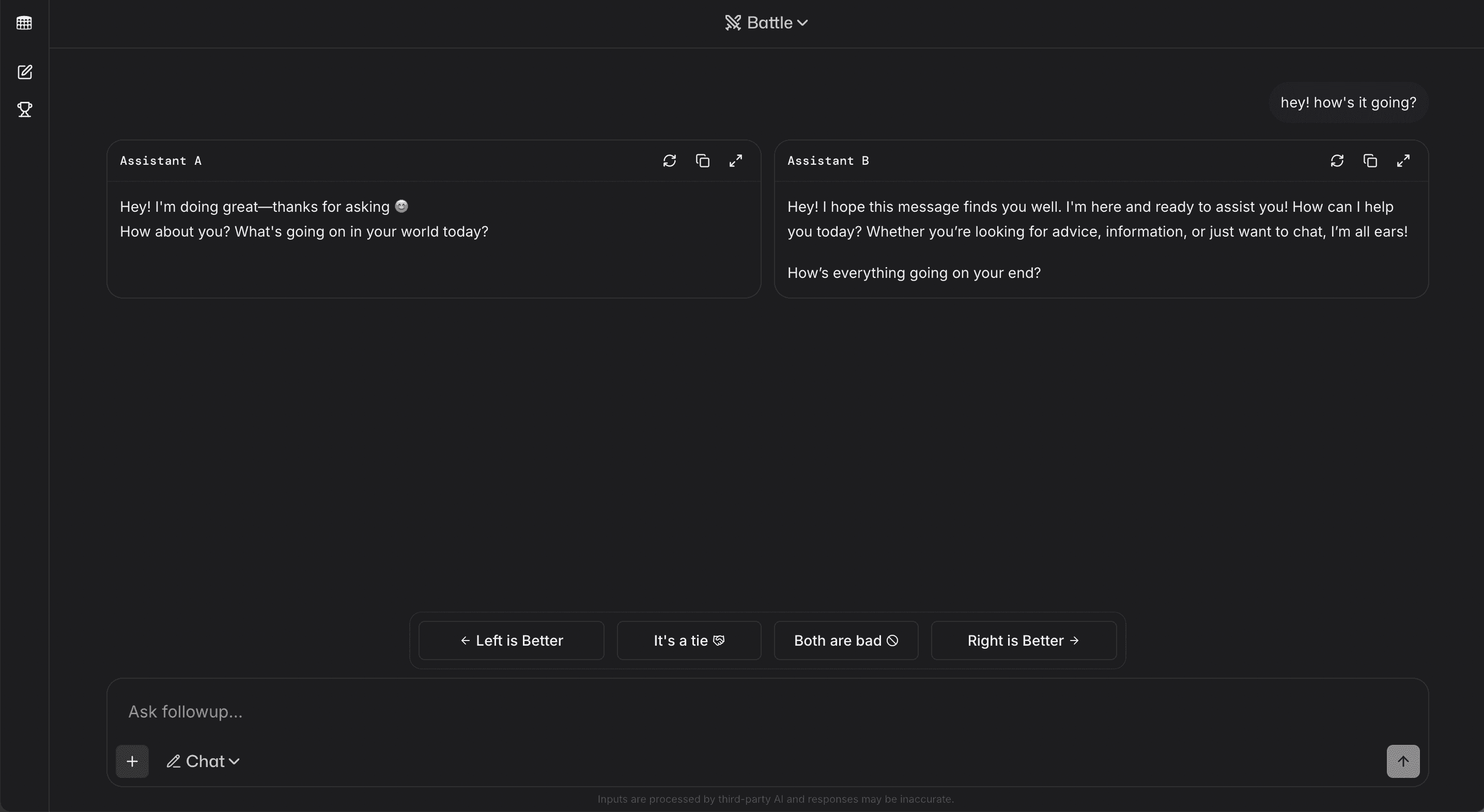
Everything on Arena revolves around one loop, so the rebuild started there. Each answer gets its own clearly separated panel, the models stay anonymous until you vote, and follow-up questions keep the battle going. Choosing specific models for a side-by-side comparison or a direct chat got simpler too.
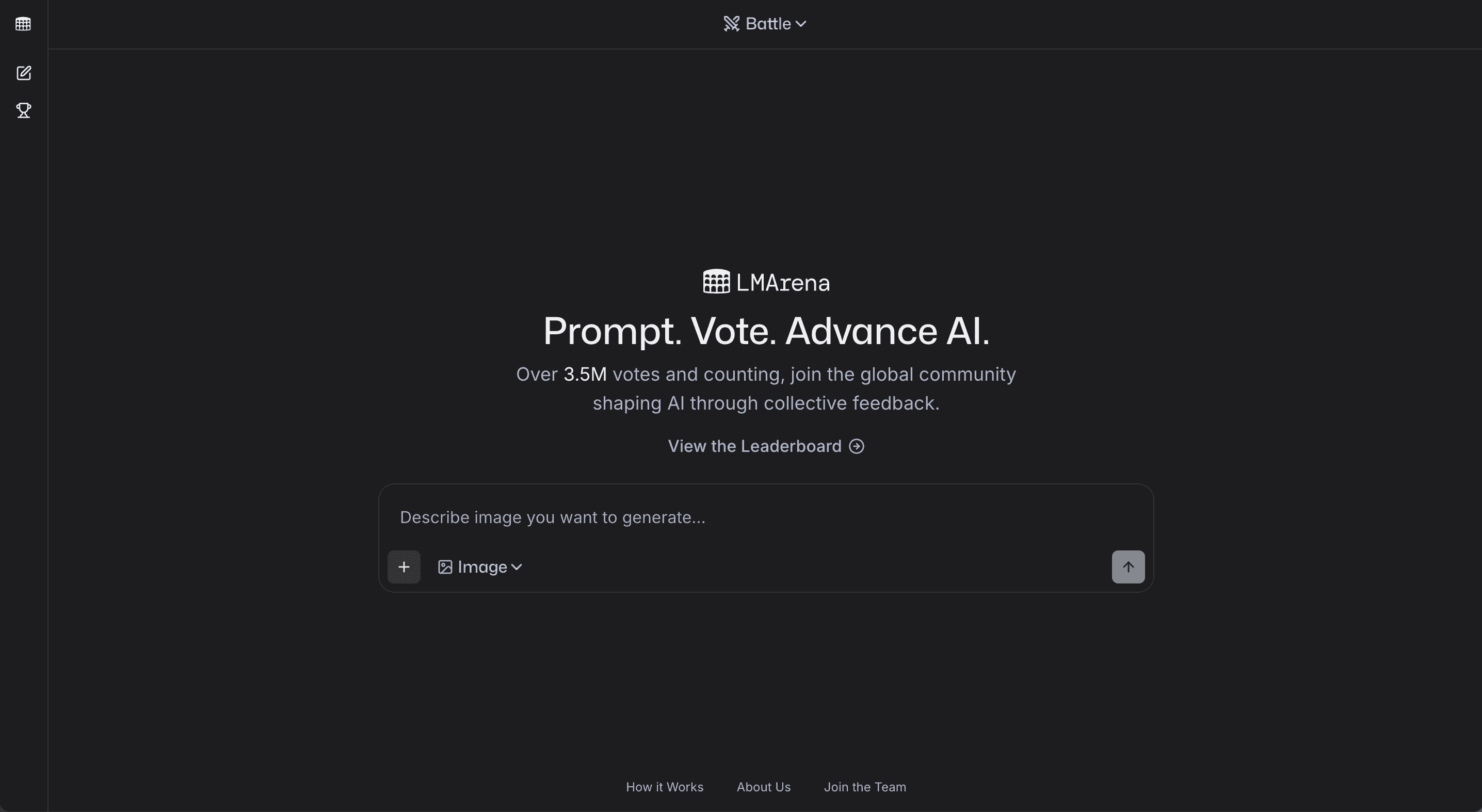
The old site struggled most on phones and at peak hours, so those were the cases the new one was built for, with lower error rates as an explicit goal. The same loop extends past text to image generation, on a foundation built for the sign-in and chat history the prototype couldn't support.
One system, every mode.
Battle, side-by-side, direct chat, image generation, and the leaderboard all share one visual language: a calm dark interface, monospaced model labels, and the same prompt box everywhere. Switching modes changes what you're doing, not how the page works.
Building every screen from shared components kept the interface consistent while the team shipped in parallel on a tight deadline, and it let new modes and features slot in without a redesign.
Open research, handled with care.
Every prompt on Arena goes to third-party model providers, and the votes become research data the wider AI community relies on. That made compliance part of the product from day one, starting with a plain disclosure on every conversation that inputs are processed by third-party AI.
Let’s build something big.
Tell us about your engineering goals. We’ll tell you how we’d get there.
Get in touch